Early and later onset vitiligo show different genetic signals
Dissecting age-specific genetic architecture of vitiligo through integrative Post-GWAS analysis
What the study says
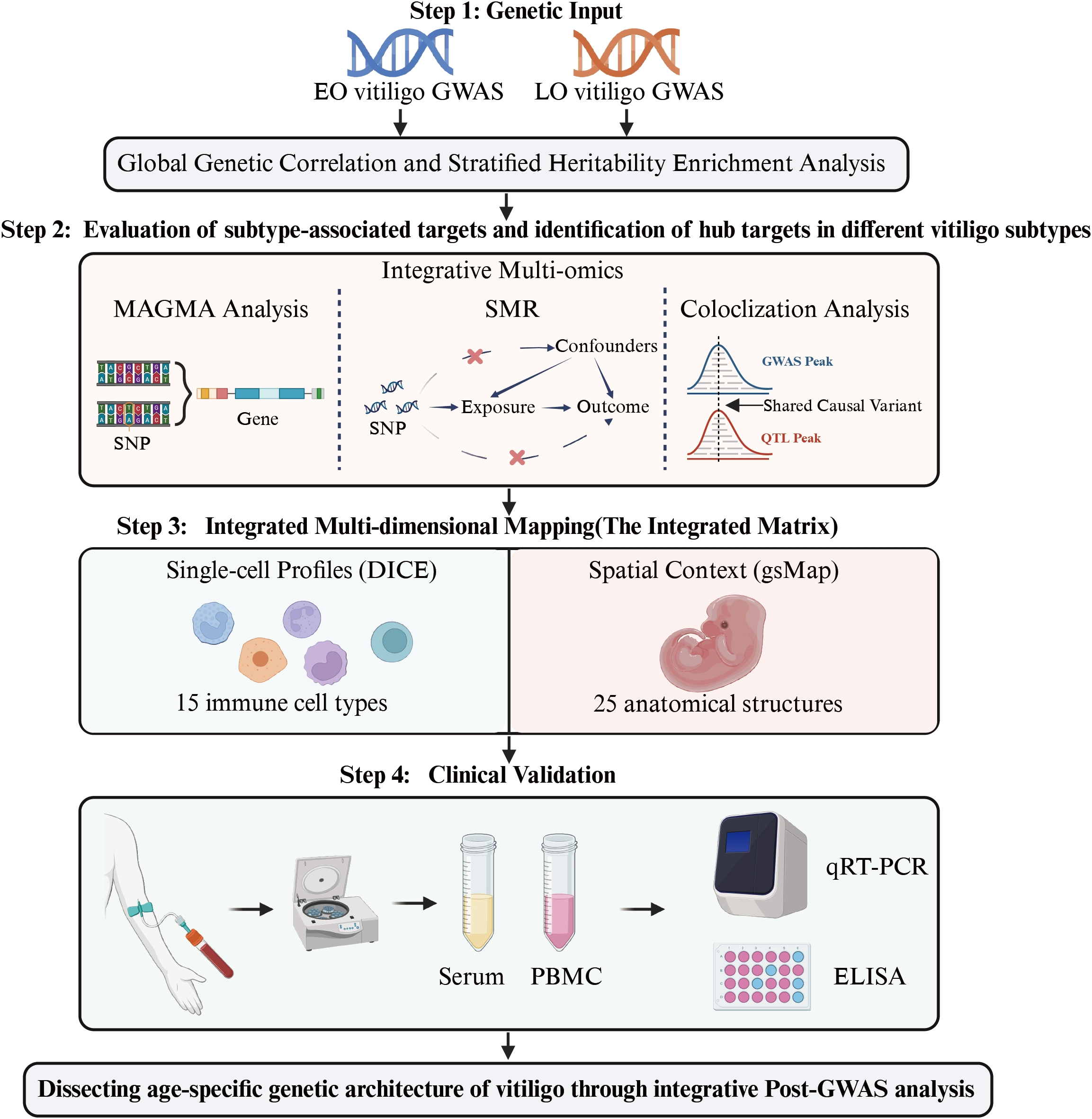
A genetics study compared early and later onset vitiligo using existing association datasets, immune-cell information and exploratory blood analyses. The two subtypes shared some genetic signals but did not overlap completely. The authors highlighted different candidate genes and cellular contexts, including RNASET2 for earlier onset and GZMB and TEF for later onset. The findings suggest that age at disease onset may reflect biological differences worth investigating. They remain exploratory: the work does not provide a clinical genetic test or establish a personalised treatment strategy.
How to interpret this finding
Exploratory genetic associations, with a small validation sample. Not a clinical test.
Research findings describe groups of participants. Discuss their relevance to your own care with your clinician.
References & original sources
These links identify the actual paper, its indexed record and available full text.
Image source & reuse
Si, Wang, Chen, Feng, Zhao and Sun / Frontiers in Immunology (2026), Figure 1
Original study Figure 1: workflow for analysing genetic differences between early and later onset vitiligo.
View original image sourceCC BY 4.0